
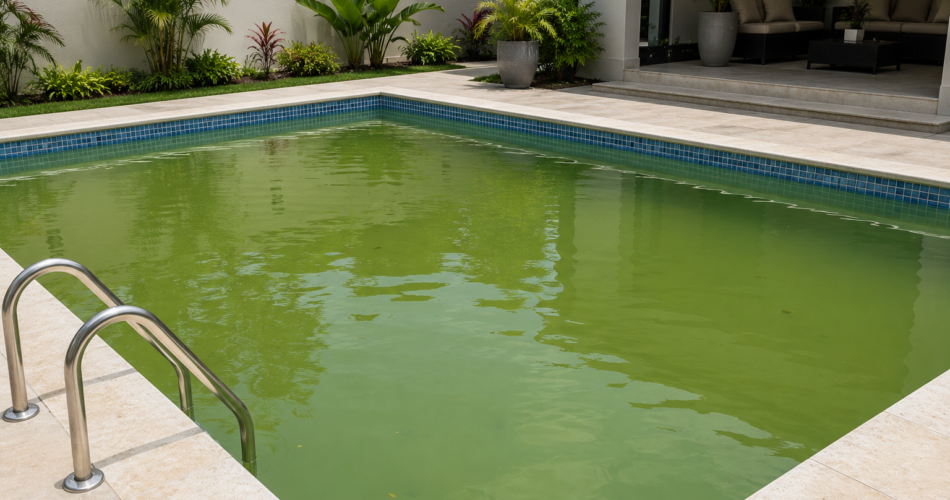
Nothing is more disappointing than looking forward to a swim only to find your pool water has turned green. While it may seem like a serious problem, a green swimming pool is usually caused by a few common issues that can be identified and fixed with the right approach.
In most cases, green pool water is a sign that something in the pool’s balance or maintenance routine needs attention. Understanding the cause is the first step toward restoring your pool to its clear, inviting condition.
Algae Growth
The most common reason a swimming pool turns green is algae. Algae are tiny plant-like organisms that thrive in warm water, especially when chlorine levels are too low.
Once algae begin to grow, they spread quickly and can turn the water from slightly cloudy to bright green within a matter of days.
Algae are more likely to appear when:
- Chlorine levels drop below the recommended range.
- The pool is exposed to long periods of sunlight.
- Leaves, dirt, and other debris are left in the water.
- The pool has not been cleaned regularly.
In the early stages, the pool floor or walls may feel slippery before the water changes colour.
Low or Unbalanced Pool Chemicals
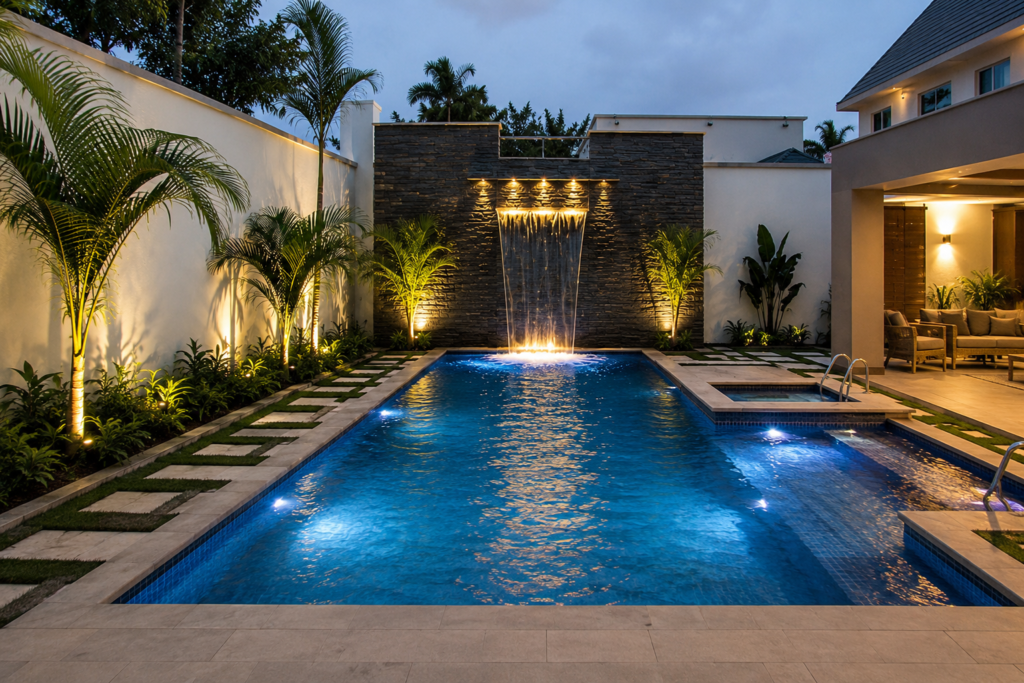
Pool water depends on the right balance of chemicals to stay clean and safe. If these levels become unbalanced, algae can grow more easily, and the water may lose its clarity.
The most important water levels to monitor include:
Chlorine
Chlorine kills bacteria and algae. When chlorine levels are too low, algae can multiply rapidly.
PH Level
A high or low pH makes chlorine less effective. Even if enough chlorine is added, it may not work properly if the pH is outside the recommended range.
Alkalinity
Alkalinity helps stabilise the pH level. When alkalinity is too low or too high, maintaining balanced water becomes more difficult.
Testing your pool water regularly helps identify these issues before they become bigger problems.
Poor Filtration or Water Circulation
Your pool filter plays a major role in keeping the water clean. It removes dirt, organic matter, and tiny particles that can encourage algae growth.
If the filtration system is not working efficiently, debris remains in the water and creates an environment where algae can thrive.
Common filtration problems include:
- Dirty or clogged filters
- Running the pump for too few hours each day
- Blocked skimmer baskets
- Poor water circulation in certain areas of the pool
Even with balanced chemicals, poor filtration can still lead to green water.
Organic Debris in the Pool
Leaves, grass, insects, pollen, and other organic materials introduce nutrients that algae feed on.
If debris is allowed to accumulate, especially after heavy rain or windy weather, the water quality can decline quickly.
Regular skimming and vacuuming reduce the amount of organic matter that enters the pool.
High Metal Content
Sometimes green water is not caused by algae at all.
Water containing high levels of copper or iron can turn green after chlorine is added. This often happens when pool water comes from certain water sources or when metal components begin to corrode.
One way to tell the difference is that metal-related green water often remains clear, while algae usually make the water cloudy.
Professional water testing can determine whether metals are responsible.
How to Identify What’s Causing Your Green Pool
Before treating the problem, it’s important to identify the underlying cause. A few simple observations can help you determine what’s happening.
If the water is green and cloudy and the pool walls feel slippery, algae are the most likely cause. If the water is green but remains clear, high levels of metals such as copper or iron may be responsible. Weak water flow from the return jets or poor circulation often points to a filtration problem, while a strong chlorine smell combined with green water may indicate that the pool’s chemical balance is off. Large amounts of leaves, grass, or other debris in the water can also contribute to algae growth by introducing nutrients into the pool.
Using a pool water testing kit can provide valuable information about chlorine, pH, and alkalinity levels, making it easier to identify the problem and choose the right treatment.
How to Restore a Green Swimming Pool
1. Remove Debris
Begin by removing leaves, insects, and other debris from the surface and floor of the pool. This reduces the nutrients that algae feed on and allows pool chemicals to work more effectively.
2. Brush the Pool Walls and Floor
Brush the walls, floor, steps, and corners to loosen algae attached to the pool surfaces. This makes it easier for chlorine and the filtration system to eliminate it.
Test and Balance the Water
Use a reliable pool testing kit to check:
- Free chlorine
- pH
- Total alkalinity
Adjust each level according to the recommended range before carrying out further treatment.
3. Shock the Pool
Pool shock involves adding a large dose of chlorine to quickly destroy algae and bacteria.
Always follow the manufacturer’s instructions and allow the pump to circulate the water continuously during treatment.
4. Run the Filtration System
Keep the pump running for at least 24 hours while treating the pool.
Clean or backwash the filter regularly during this process because dead algae can clog the filtration system quickly.
5. Vacuum the Pool
Once the algae have died, vacuum the pool thoroughly to remove any remaining debris.
If the algae bloom is severe, you may need to repeat brushing, shocking, and filtering before the water becomes completely clear.
How to Prevent Your Pool from Turning Green Again
Preventing green pool water is much easier than fixing it.
A good pool maintenance routine includes:
- Testing the water at least once a week.
- Keeping chlorine within the recommended range.
- Maintaining balanced pH and alkalinity.
- Running the filtration system daily.
- Cleaning or backwashing filters regularly.
- Removing leaves and debris as soon as possible.
- Brushing and vacuuming the pool on a routine schedule.
- Covering the pool when it is not in use to reduce contamination.
Consistent maintenance keeps the water healthy, protects your pool equipment, and reduces the likelihood of costly treatments later.
When to Seek Professional Help
If your pool remains green after several treatments, or if testing indicates high metal levels, it may be time to contact a pool professional.
Persistent green water can sometimes point to equipment problems, hidden algae growth, or water quality issues that require specialised treatment. A professional can identify the underlying cause and recommend the most effective solution.
At Pools and Fountains, we specialise in designing and installing high-quality swimming pools that combine durability, functionality, and visual appeal. We also believe that proper pool maintenance is just as important as quality construction. With the right care and routine maintenance, your swimming pool can remain crystal clear, safe, and enjoyable for many years to come.
Common Reasons Swimming Pools Turn Green