
So, you’ve decided you want a swimming pool. Before you start thinking about tiles, lighting or water features, there’s one important question to answer: what shape should the pool be?
The answer isn’t always about choosing the shape you like most. The size of your compound, the available space, how you plan to use the pool and the overall look of your property should all guide your decision.
Here are some popular pool shapes and what to consider before choosing one.
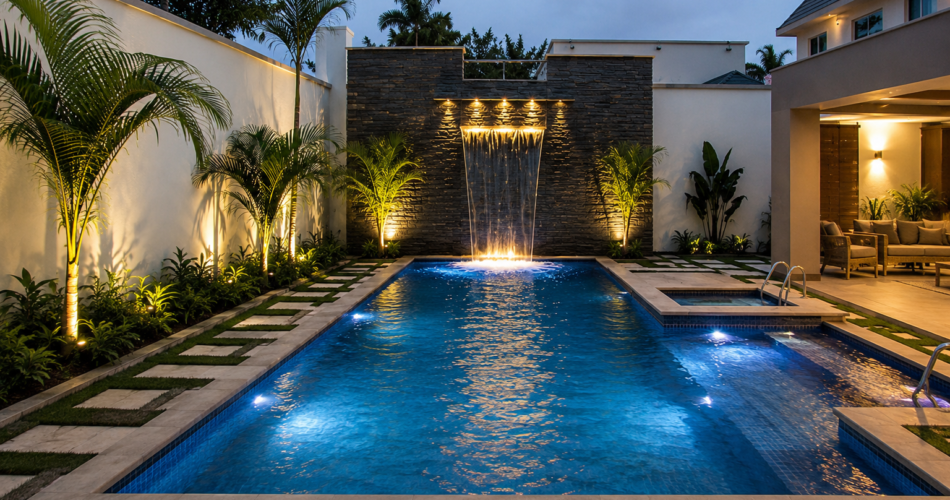
1. Rectangular Pools
The rectangular pool is a classic for a reason. Its straight lines give a property a clean and organised look. It is also a practical choice if you want enough space for swimming laps or different activities.
Rectangular pools work well for:
- Modern homes
- Hotels
- Resorts
- Estates
- Fitness centres
- Larger commercial properties
They are also easy to pair with features such as pool lighting, steps, decking and water features.
2. Square Pools
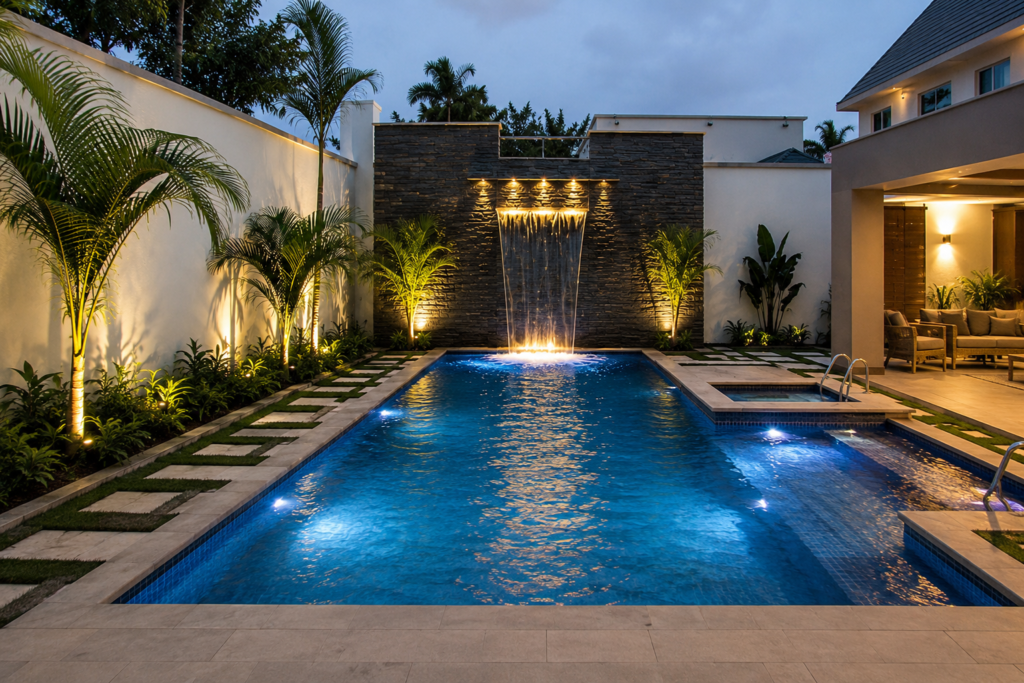
If you have a smaller or more compact space, a square pool can be worth considering. It gives you a simple layout without taking up as much visual space as a long rectangular pool.
Square pools can work well in smaller compounds, courtyards and homes where the pool is mainly for relaxation rather than serious swimming.
3. Circular and Round Pools
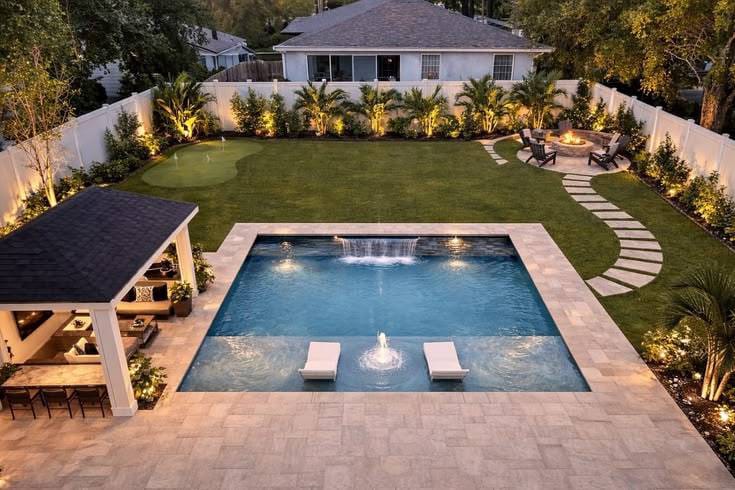
Round pools have a softer appearance than pools with straight edges. They can work particularly well in gardens and outdoor spaces where you want the pool to become part of the landscaping.
A circular pool can also create a natural focal point, especially when surrounded by plants, seating or other outdoor features.
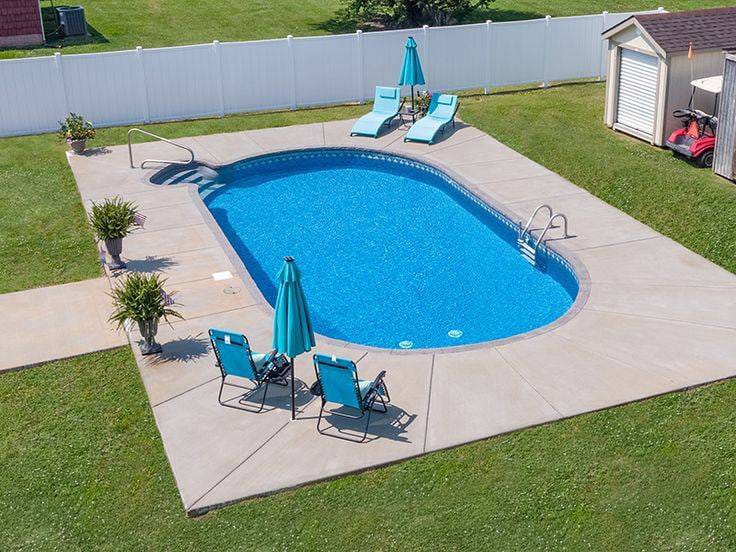
4. Oval Pools
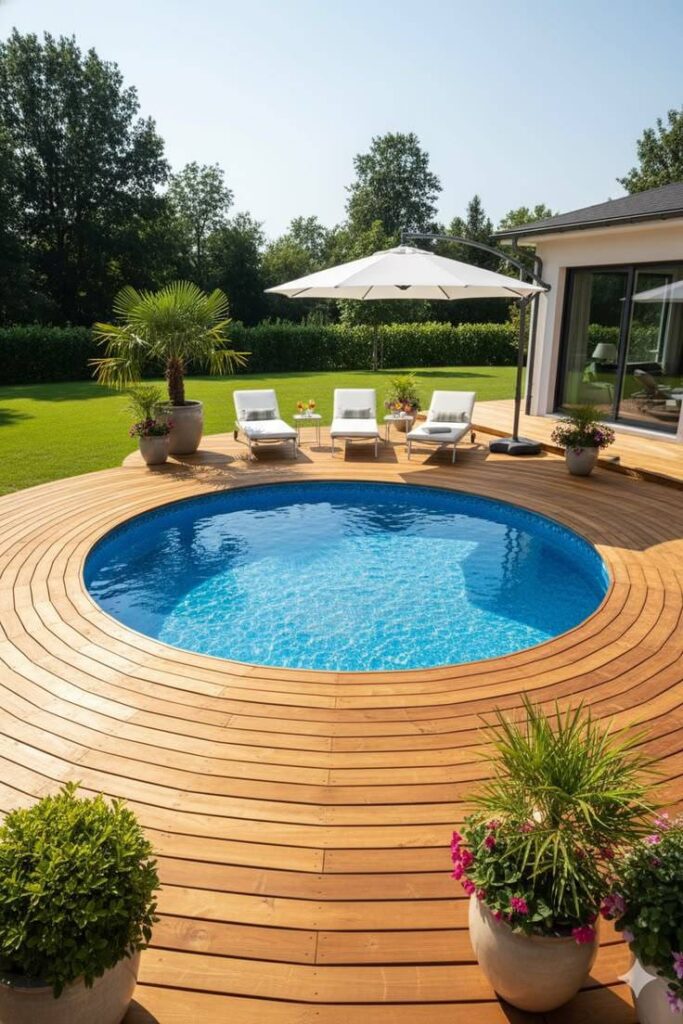
Oval pools give you some of the benefits of a rectangular pool while having softer, curved edges. They can suit properties where you want a swimming area that feels less formal.
The shape also works nicely in landscaped spaces, particularly when the pool is surrounded by greenery or curved pathways.
5. Freeform Pools
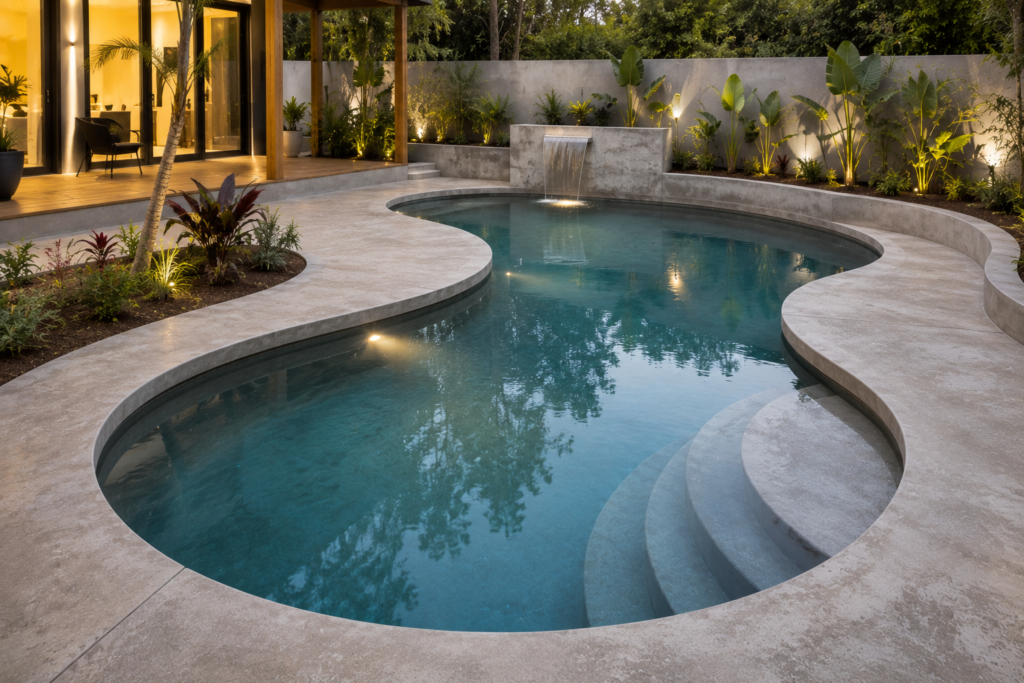
Freeform pools are useful when you don’t want to follow a standard shape. Instead of straight lines or perfect curves, the pool can be designed around the available space and the look you want.
This can be a good option for properties with unusual layouts or for homeowners who want the pool to feel more natural. Freeform pools can also work beautifully with landscaping, rocks and water features.
6. L-Shaped Pools
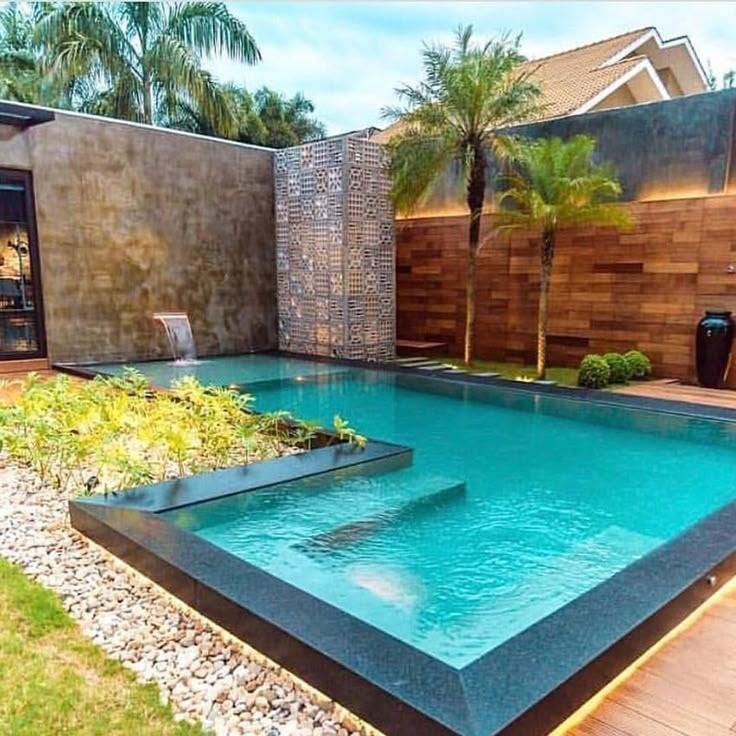
An L-shaped pool can give you two areas within the same pool. For example, one section can be used for swimming while another provides a shallower area for relaxing or spending time with children.
The shape can also work well when you want to separate the pool from another part of your outdoor space.
What Should You Consider Before Choosing a Pool Shape?
The shape of the pool should work with your property, not against it.
Look at Your Available Space
Start with the space you actually have. Measure the area and consider other things that need to fit around the pool, including walkways, landscaping, outdoor furniture, drainage and access points.
A beautiful pool design can become impractical if there isn’t enough room around it.
Think About How You Will Use the Pool
Ask yourself what you really want from the pool. Will you mainly use it to relax? Do you want to swim laps? Will children be using it? Will you entertain guests? Is it for a hotel, estate or other commercial property?
Your answer can help narrow down the shapes that make the most sense.
Consider the Style of Your Property
Your pool should feel like part of the property. A modern house may suit a clean rectangular pool with straight lines. A garden-focused property might look better with a curved or freeform design.
There is no single shape that works for every property.
Leave Room for the Rest of the Space
Don’t plan the pool in isolation. Think about what you want around it.
You may want:
- Poolside seating
- Decking
- Landscaping
- Outdoor dining
- Changing areas
- Pool lighting
- Water features
- Safety features
Leaving enough room for these elements will make the finished space more comfortable and useful.
Does Pool Material Affect the Shape?
It can.
Fiberglass pools are typically produced in set moulds and available in different established shapes and sizes. They can be a good option when one of the available designs fits your space.
Concrete pools offer greater freedom when you want a particular shape, size or layout. This makes them useful for projects where the pool needs to be designed around an unusual space or a specific vision.
The right choice depends on your property, design and project requirements.
Let Your Property Guide the Design
Choosing a pool shape becomes much easier when you stop looking at the pool on its own and start looking at the whole property.
The right shape should fit the available space, suit the way you intend to use the pool and work naturally with the rest of your outdoor area.
At Pools & Fountains, we design and build swimming pools for residential and commercial properties, with experience in both concrete and fiberglass pools. We consider the available space, intended use and overall design before recommending the right approach for a project.